
Over the past decade, Customer Relationship Management (CRM) systems have transformed from nice-to-have tools into absolute necessities for businesses of all sizes. If you’re running a company today and don’t have a solid CRM strategy in place, you’re probably leaving money on the table. Let’s dive into why CRM development has become such a critical part of corporate success.
Understanding the CRM Revolution
Remember when businesses kept customer information scattered across spreadsheets, emails, and sticky notes? Those days are long gone. The rise of CRM development services has completely changed how companies interact with their customers. What started as simple contact management systems has evolved into sophisticated platforms that handle everything from sales pipelines to customer support and marketing automation.
The shift didn’t happen overnight. As companies grew and customer expectations increased, the need for organized, accessible customer data became impossible to ignore. CRM development has stepped in to fill that gap, offering solutions that bring order to chaos and insight to confusion.
Why Corporations Are Investing in CRM Development Services
Here’s the thing about modern business: your customers expect personalized experiences. They want to feel valued, understood, and appreciated. That’s where CRM development services come in. These systems allow companies to track every interaction, preference, and pain point for each customer.
Think about it from a practical standpoint. When your sales team has instant access to a customer’s entire history, they can close deals faster. When your support team knows what issues a customer has faced before, they can resolve problems more efficiently. When your marketing team understands customer behavior patterns, they can create campaigns that actually resonate. This isn’t just about efficiency—it’s about creating better customer experiences that drive loyalty and revenue.
The Business Impact of CRM Implementation Service
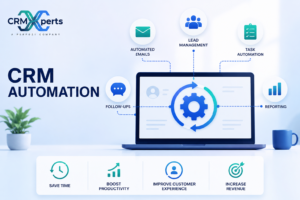
Companies that invest in proper CRM implementation service see measurable results. Sales cycles shorten. Customer retention improves. Team productivity increases. And perhaps most importantly, revenue grows.
But here’s what many businesses miss: simply having a CRM system isn’t enough. The real magic happens when you implement it correctly. A CRM implementation service ensures that your system is tailored to your specific business needs, your team is properly trained, and your processes are optimized from day one. This is where the real transformation happens.
BREAKING DOWN THE CRM DEVELOPMENT PROCESS
So what does CRM development actually involve? It’s more than just picking software off a shelf. Modern CRM development services include:
- Needs Assessment — Understanding your unique business challenges and goals
- System Selection — Choosing the right platform for your organization
- Customization — Tailoring the system to match your workflows
- Integration — Connecting your CRM with other business tools through CRM Implementation Service solutions
- Training — Ensuring your team knows how to use the system effectively
- Ongoing Support — Providing continuous optimization and troubleshooting
Each of these components is crucial. Skip one, and you risk an implementation that doesn’t deliver the results you’re hoping for.
THE CORPORATE ADVANTAGE
Large corporations have been early adopters of CRM development, and for good reason. They understand that customer data is one of their most valuable assets. By investing in sophisticated CRM systems, they’ve gained competitive advantages that smaller companies are now racing to catch up with.
The interesting part? CRM development services have become more accessible and affordable than ever. You don’t need to be a Fortune 500 company to benefit from enterprise-level CRM solutions. Mid-sized and even small businesses can now access powerful tools that were previously out of reach.
OVERCOMING COMMON CRM CHALLENGES
Of course, CRM development isn’t without its challenges. Many companies struggle with user adoption. Employees resist change. Data quality issues emerge. Integration problems pop up unexpectedly.
The key is working with experienced CRM implementation service providers who’ve seen these challenges before and know how to navigate them. They can help you avoid common pitfalls and ensure a smooth transition to your new system. Whether you need help with system selection, data migration, or ongoing optimization, a dedicated CRM Implementation Service team can guide you through every step of the process.
THE FUTURE OF CRM DEVELOPMENT
Looking ahead, CRM development continues to evolve. Artificial intelligence is making systems smarter. Automation is handling routine tasks. Mobile access is becoming standard. And integration capabilities are expanding to connect with virtually any business tool you use.
For corporations, this means the CRM systems of tomorrow will be even more powerful and intuitive than today’s solutions. The companies that start their CRM journey now will be well-positioned to take advantage of these advancements.
MAKING THE MOVE
If your company hasn’t yet embraced CRM development services, now is the time. The competitive landscape is shifting, and customers expect the personalized, efficient service that only a well-implemented CRM can deliver.
Whether you’re looking to streamline your sales process, improve customer support, or gain deeper insights into your business, a CRM implementation service can help you achieve those goals. The investment pays for itself through improved efficiency, better customer relationships, and increased revenue.
The rise of CRM development in the corporate world isn’t a trend—it’s a fundamental shift in how successful businesses operate. The question isn’t whether you need a CRM anymore. The question is: how soon can you get one in place?
FREQUENTLY ASKED QUESTIONS
What Exactly Is CRM Development?
CRM development refers to the process of creating, customizing, and implementing Customer Relationship Management systems tailored to a business’s specific needs. It involves selecting the right platform, configuring it to match your workflows, integrating it with other tools, and training your team to use it effectively.
How Does CRM Development Benefit My Business?
CRM development delivers multiple benefits including improved customer relationships, streamlined sales processes, better data organization, increased team productivity, enhanced customer support, and ultimately higher revenue. Companies typically see measurable improvements in sales cycles, customer retention, and operational efficiency.
What’s the Difference Between CRM Development and CRM Implementation Service?
While the terms are sometimes used interchangeably, CRM development is the broader process of building and customizing CRM solutions, while CRM implementation service specifically focuses on deploying and integrating the system into your existing business operations. Implementation service is a key component of the overall development process.
How Long Does a Typical CRM Implementation Take?
The timeline varies depending on your business complexity, the platform you choose, and the level of customization required. Small implementations might take a few weeks, while enterprise-level deployments can take several months. A good CRM implementation service provider will give you a realistic timeline during the planning phase.
What Should I Look for in a CRM Development Partner?
Look for providers with proven experience in your industry, a track record of successful implementations, strong customer support, transparent pricing, and the ability to customize solutions to your specific needs. Don’t just focus on the software—the expertise and support of your implementation partner matter just as much.
Is CRM Development Expensive?
CRM solutions range from affordable cloud-based platforms for small businesses to enterprise solutions for large corporations. The cost depends on the platform, the level of customization, and the scope of implementation. Most businesses find that the return on investment justifies the initial expense through improved efficiency and revenue growth.
Can I Integrate My CRM with Other Business Tools?
Yes, most modern CRM systems offer integration capabilities with email platforms, accounting software, marketing automation tools, and other business applications. A good CRM implementation service will ensure these integrations are set up correctly and working seamlessly.
How Do I Ensure My Team Adopts the New CRM System?
Successful adoption requires proper training, clear communication about the benefits, ongoing support, and leadership buy-in. A quality CRM implementation service includes comprehensive training programs and change management support to help your team transition smoothly.

CRM implementation specialist at CRM Xperts, working with Zoho and Salesforce ecosystems to help businesses get more from their CRM investment.